S01:E04
Solar systems rarely fail all at once. What actually happens—especially on commercial rooftops is slow, quiet performance drift. Energy output tapers off, alarms stay silent, and asset owners don’t notice until revenue losses are already baked in.
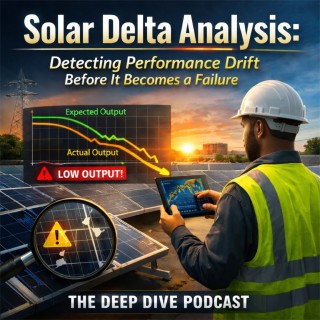
In this episode of The Deep Dive, we break down Solar Delta Analysis a practical, field-tested method for identifying performance degradation early by comparing expected versus actual production over time.
This is not a theoretical conversation. We walk through how delta analysis works in the real world, what data actually matters, and why nameplate capacity alone is one of the most misleading metrics in solar operations.
You’ll hear:
What “delta” really means in a solar O&M context
How slow performance drift shows up long before alarms trigger
Common causes of drift: soiling, shading changes, optimizer mismatch, communication issues, and component aging
Why comparing system-to-system and string-to-string performance is more revealing than chasing daily kWh
How asset owners lose money quietly when no one is watching trends
Where most monitoring platforms fall short and how operators compensate in the field
We also touch on why older systems (2010–2021 vintage especially) are the most vulnerable to unnoticed underperformance, and how delta analysis fits into modern inspection, repowering, and asset-management strategies.
If you’re a building owner, asset manager, EPC, or O&M provider, this episode explains why “the system is online” is not the same as “the system is performing.” And if you’re responsible for production guarantees, this conversation should make you uncomfortable in a good way.
Solar isn’t set-and-forget. Performance requires intent, comparison, and context. Delta analysis provides all three.