No transcript available for this episode.
S01:E06
Across much of Africa, the energy conversation jumps between two extremes: utility-scale power on one end and small solar lanterns on the other. What’s often ignored is the “missing middle” small businesses, clinics, farms, workshops, and community facilities that need reliable power but fall outside traditional grid and donor models.
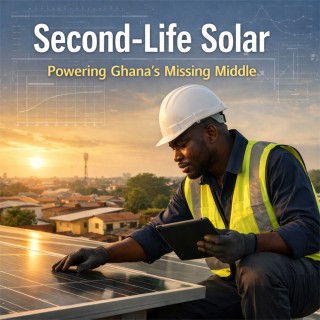
In this episode, we examine how second-life solar equipment repurposed commercial-grade panels, inverters, and balance-of-system components can be responsibly deployed to serve this gap in Ghana.
This is not about dumping e-waste or cutting corners. It’s about engineering discipline: inspection standards, derating strategies, risk management, and aligning technical reality with local economic conditions. We discuss where second-life solar makes sense, where it absolutely does not, and how improper deployments can do more harm than good.
You’ll hear a grounded discussion on:
Why the “missing middle” matters for real economic development
The difference between reuse, refurbishment, and failure-export
Technical criteria for second-life PV viability
O&M realities in emerging markets
Why local capacity and accountability matter more than panel wattage
This episode is for engineers, developers, policymakers, and operators who want practical solutions, not hype. If we’re serious about energy access, we have to be serious about system integrity.